
HaptiCraft: A Modular Multimodal Haptic Controller for Immersive Virtual Reality Interactions
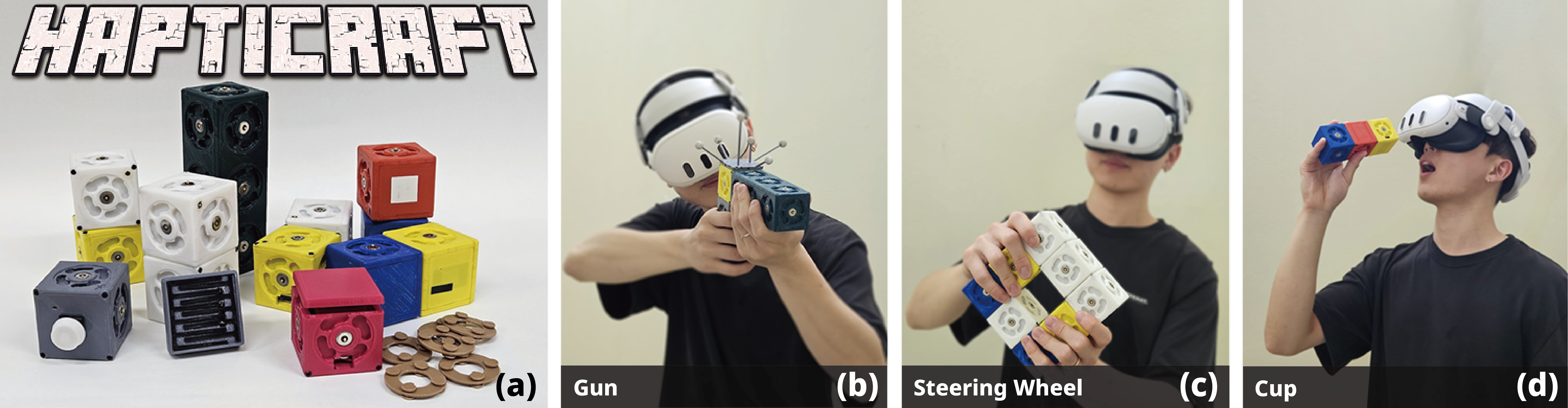
HaptiCraft: (a) individual modules and (b) Gun, (c) Steering Wheel, (d) Cup use cases in VR.
Abstract
This paper presents HaptiCraft, a modular handheld haptic controller designed to replicate the appearance, mass distribution, and multimodal haptic properties of virtual objects. HaptiCraft consists of many modules that provide distinct functions for assembly and multimodal haptic feedback, supporting five types: vibration, impact, thermal, variable inertia, and variable stiffness. Users can readily assemble these modules to create a controller tailored to their needs. To simplify the design process, especially for novice users, we also provide a graphical authoring tool and assess its usability. Finally, we evaluate the system's effectiveness through various virtual reality (VR) scenarios, demonstrating that HaptiCraft significantly enhances user experience.
Key Contributions
- 1
Six distinct haptic modules (vibration, impact, thermal, variable inertia, variable stiffness, and shape) that support flexible modular assembly
- 2
A graphical authoring tool enabling novice users to design both controller shape and multimodal haptic feedback
- 3
Perceptual validation confirming 83.4% identification accuracy for bimodal (V+I) stimuli
- 4
Summative VR user study with 18 participants across 7 VR scenarios demonstrating significant UX improvements
HaptiCraft Modules
Each module serves a distinct function and can be freely assembled with magnetic pogo-pin connectors, sharing power from a single battery module.
55 g | 48x48x48 mm
Unit cube module for structural assembly. Provides no active haptic effect but forms the spatial scaffold of the controller.
71 g
Dual-motor vibrotactile feedback up to 6 G amplitude across 0-210 Hz, covering a wide perceptual frequency range.
71 g
Short, strong impulse at 30 G / 100 ms, perceptually distinct from vibration for events like gunshots or collisions.
65 g
Peltier element delivers +18C heating and -8C cooling relative to ambient, enabling temperature sensation in VR.
235 g
A moving brass mass shifts the moment of inertia (1.02-2.17 x10^4 g cm^2), simulating different object lengths.
140 g
Magneto-rheological fluid actuator provides more than 10x stiffness range (2-25 N/mm), rendering soft or rigid surface feel.
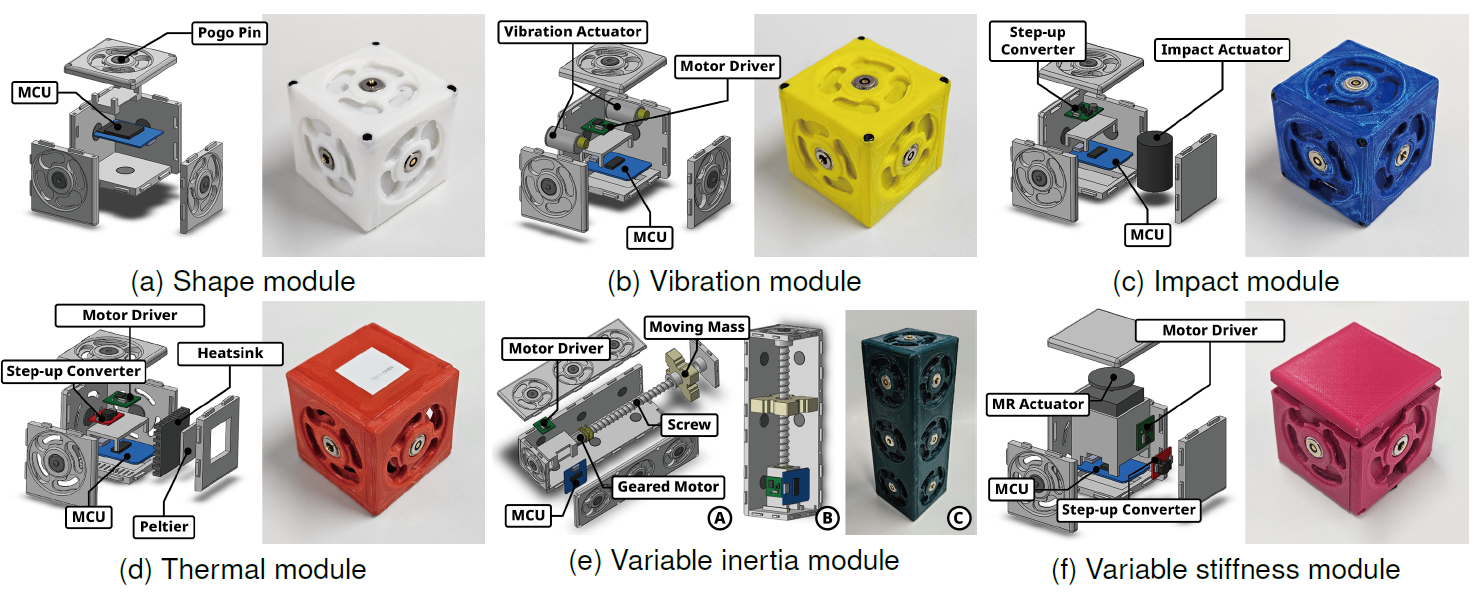
Fig. 3. Designs of haptic modules: (a) shape, (b) vibration, (c) impact, (d) thermal, (e) variable inertia, (f) variable stiffness.
Graphical Authoring Tool
HaptiCraft includes a WYSIWYG graphical authoring tool that allows users — including haptic novices — to design both the physical controller shape and multimodal haptic feedback through an intuitive GUI. Users assemble modules visually, then assign haptic properties via a timeline-based editor. The tool exports a .hdf file compatible with Unity.
6.3/7
Perceived Ease of Use
6.6/7
Attitude Toward Using
6.4/7
Behavioral Intention
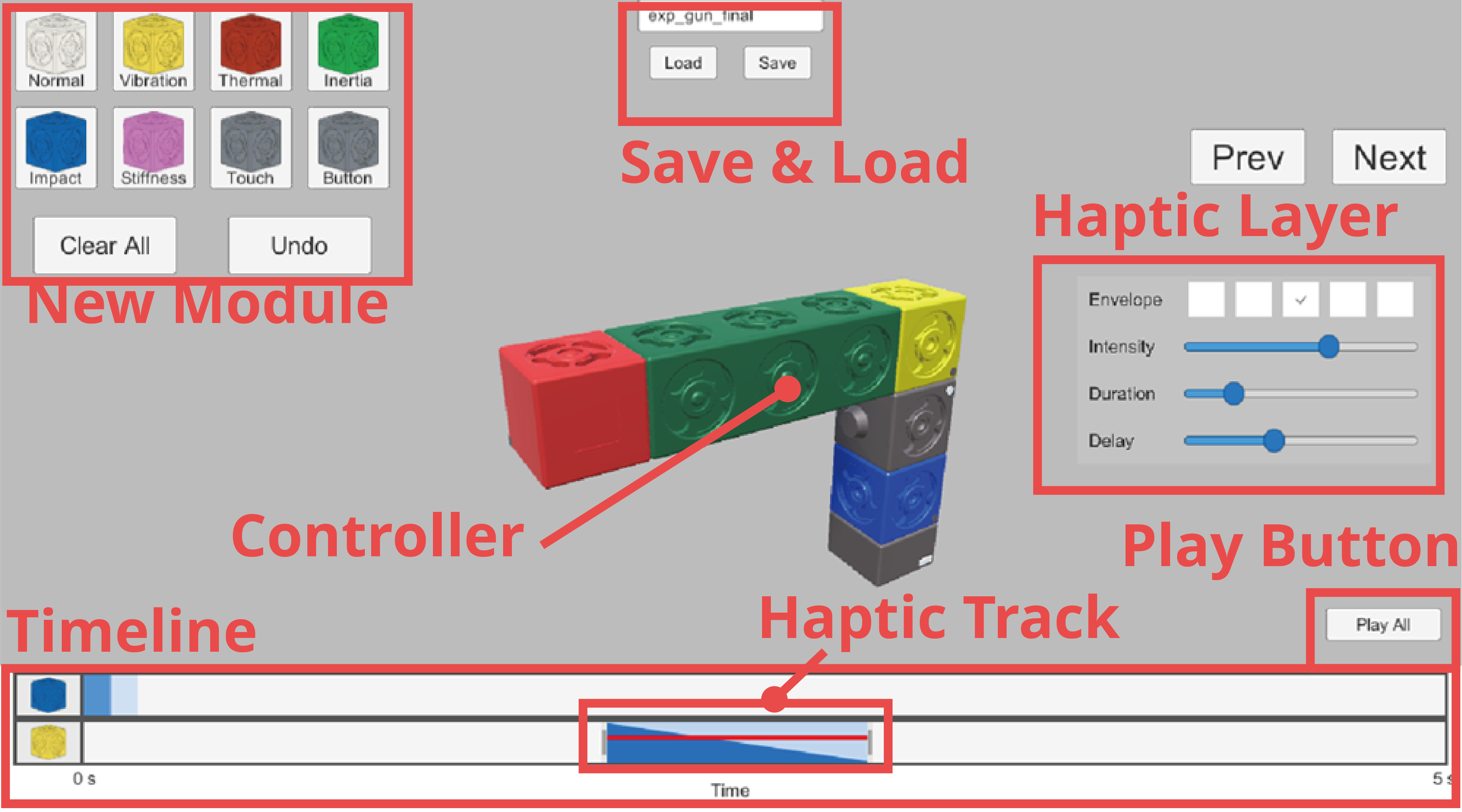
Fig. 9. GUI of the HaptiCraft authoring tool.
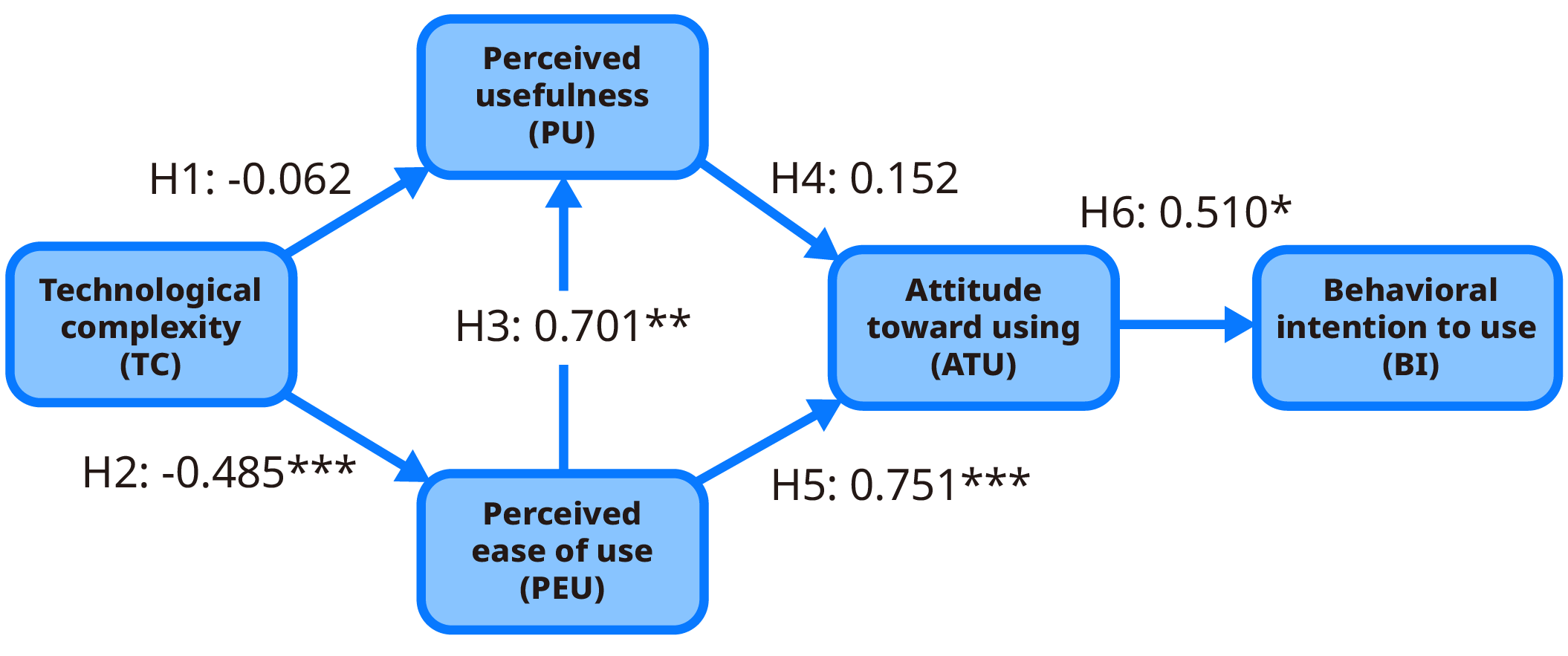
Fig. 12. Technology Acceptance Model (TAM) for the controller authoring tool.
Summative VR User Study
18 participants evaluated HaptiCraft Multimodal (HAP-MM), HaptiCraft Unimodal (HAP-UM), and a commercial controller (COM) across 7 VR scenarios, rating Realism, Immersion, Harmony, and Enjoyment.
Gatling Gun
Impact + Inertia
Flamethrower
Vibration + Heat
Sword
Impact + Inertia
Wand
Vibration + Inertia
Cup
Vibration + Impact + Thermal
Drill
Vibration + Impact
Frying Pan
Inertia only
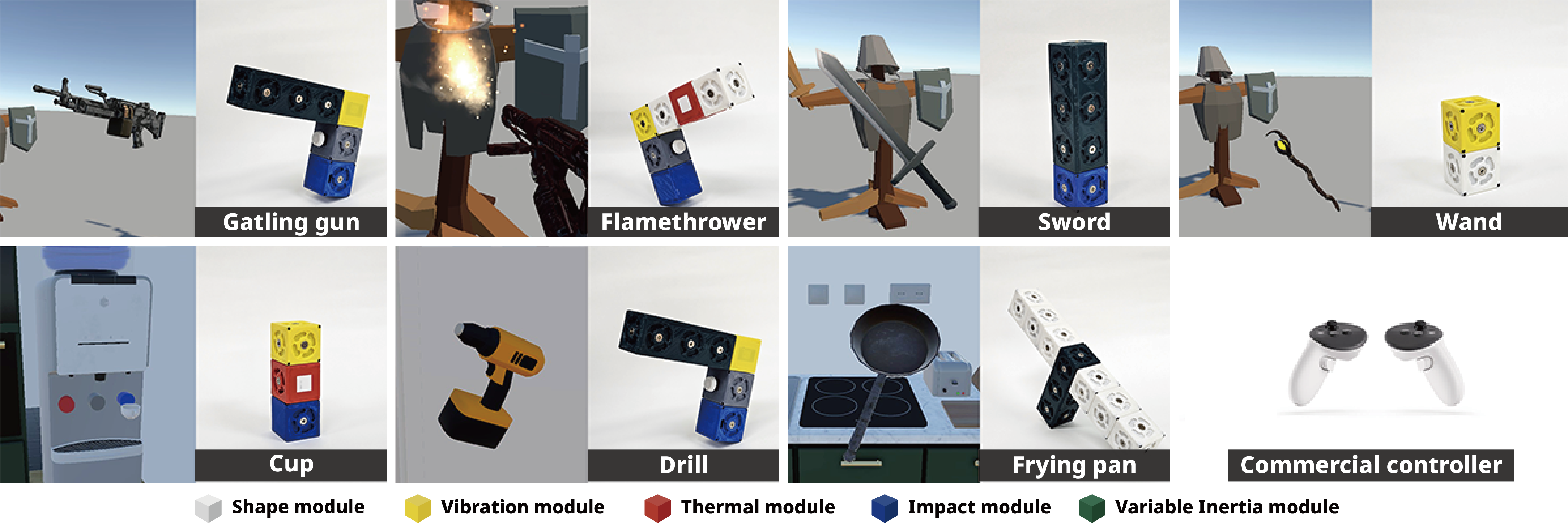
Fig. 15. Seven VR scenarios evaluated in the summative user study, each paired with a multimodal haptic controller (HAP-MM).
Citation
@article{park2026hapticraft,
  title   = {HaptiCraft: A Modular Multimodal Haptic Controller
             for Immersive Virtual Reality Interactions},
  author  = {Park, Chaeyong and Kim, Jeongwoo and Song, Yuk-Gwon
             and Kim, Sang-Youn and Choi, Seungmoon},
  journal = {IEEE Transactions on Visualization and Computer Graphics},
  year    = {2026},
  doi     = {10.1109/TVCG.2026.3683951}
}
This work was supported by NRF (RS-2024-00451947, RS-2026-25483739), ITRC (IITP-2026-RS-2024-00437866), and ICT Creative Consilience Program (IITP-2026-RS-2020-II201819).